/avatar.png

HackingPassion.com

Hacking is not a hobby but a way of life ♥

Fake GitHub Exploits Target Security Researchers: Download a PoC, Get Malware

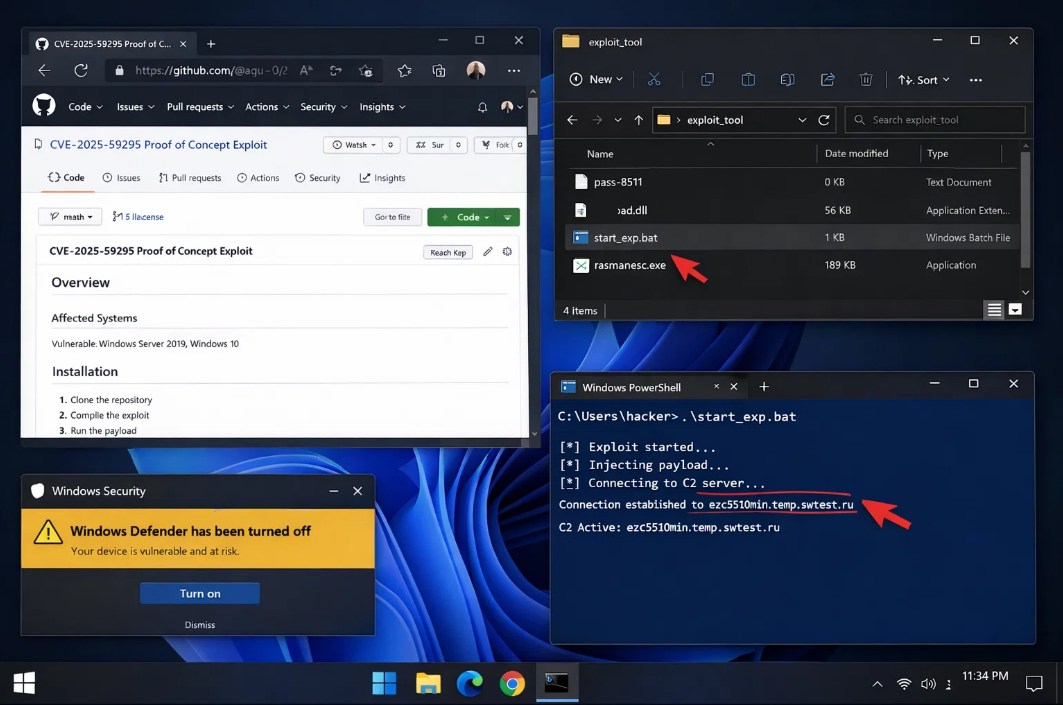
Attackers are targeting security researchers through GitHub. You downloaded a proof-of-concept exploit from GitHub. Professional README. Detailed instructions. Real CVE number. Except it’s malware. 😱 And now your system is compromised.

Kaspersky published their findings on December 23, 2025.

Attackers are creating GitHub repositories with fake exploits for real vulnerabilities. CVE-2025-59295 (CVSS 8.8), CVE-2025-10294 (CVSS 9.8), CVE-2025-59230 (CVSS 7.8). Fake exploits that install malware.

Kaspersky identified 15 malicious repositories pushing this malware. GitHub has removed them, but new repositories will pop up under different account names.

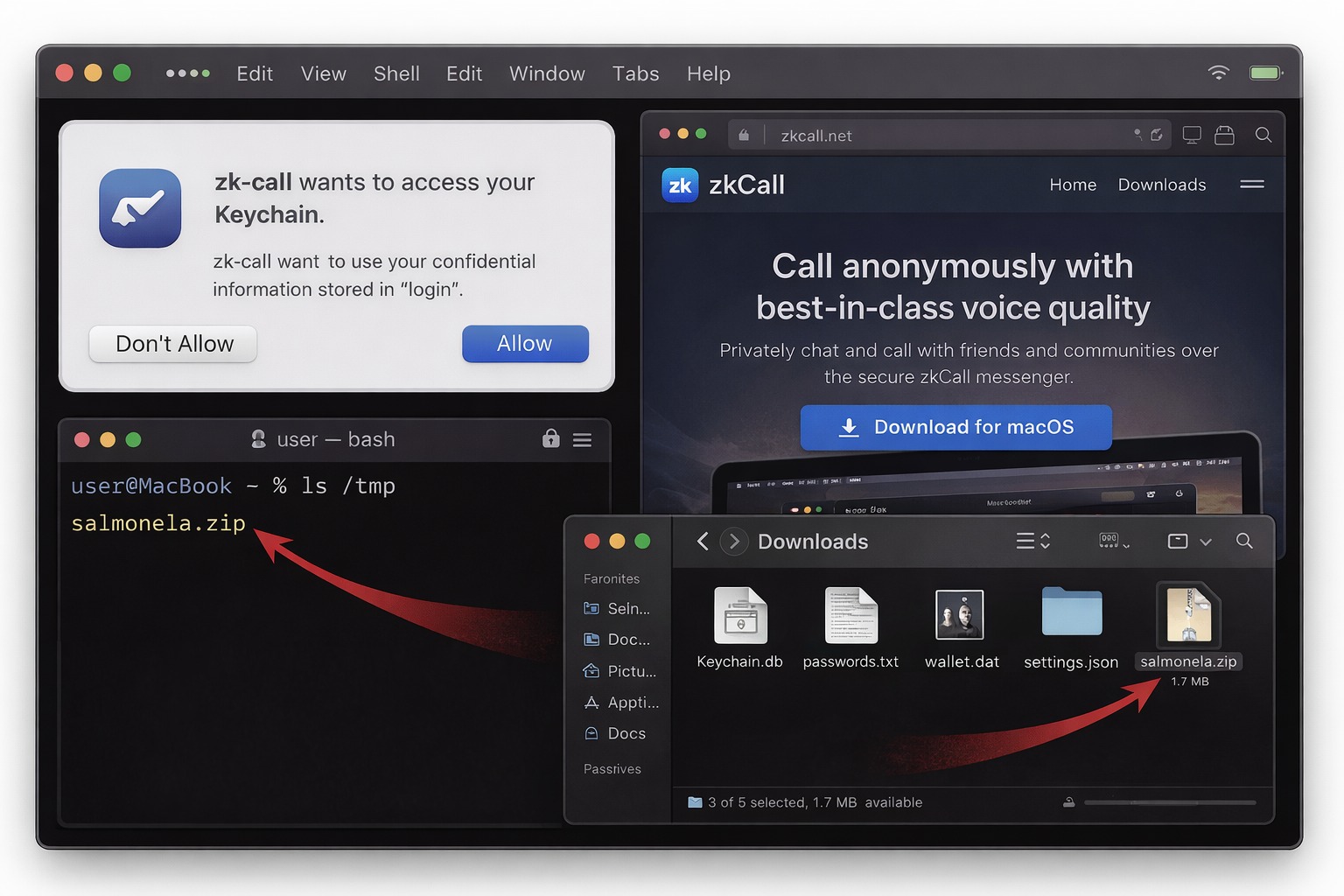
Apple Approved It: MacSync Stealer Bypasses Notarization to Infect Hundreds of Macs

Apple’s security team reviewed this app. Approved it. But now it steals your passwords, crypto wallets, and Telegram account. 😳 Hundreds of Macs infected since mid-2025.

MacSync Stealer just hit number 6 on Red Canary’s top 10 threat list for December 2025. Most victims in Ukraine, the US, Germany, and the UK.

In April 2025, a hacker called “mentalpositive” built a cheap macOS stealer named Mac.c. Price tag: $1,000. That’s budget pricing in the malware world. AMOS, the market leader, charges $3,000 per month.

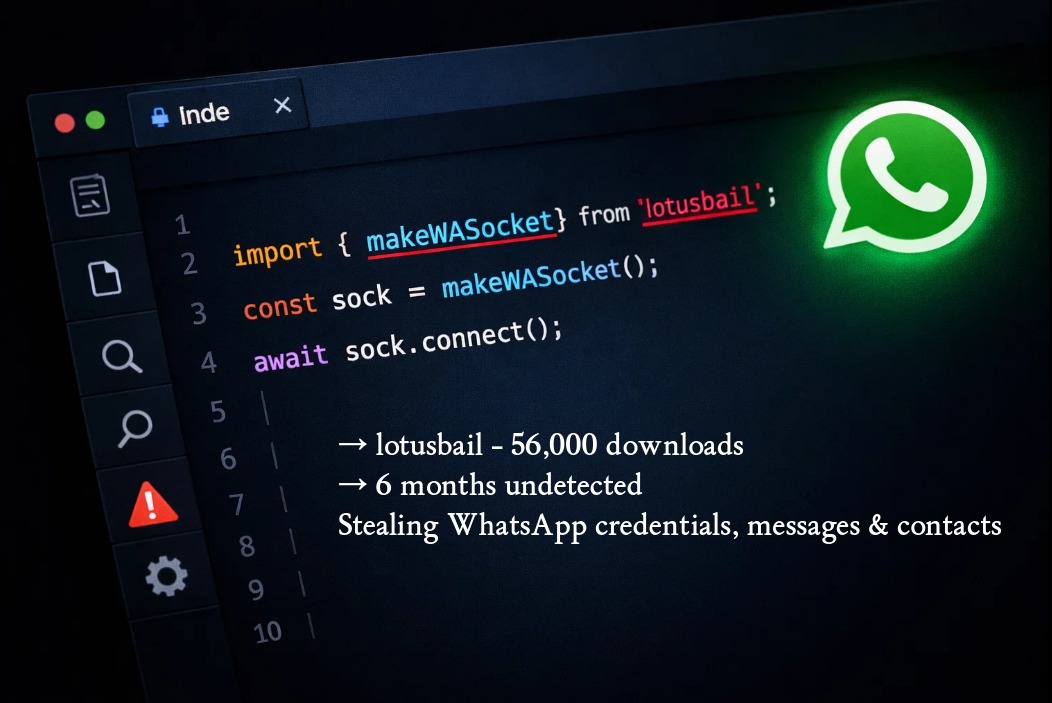
Malicious npm Package Stole WhatsApp Messages for 6 Months: 56,000 Downloads

56,000 downloads. 6 months online. A WhatsApp library on npm was stealing credentials, messages, and contacts. Nobody noticed. 🤔 The package is called “lotusbail” and it looks like a legitimate fork of the popular WhatsApp API library @whiskeysockets/baileys.

Same functionality. Works perfectly. Send messages, receive messages, handle media. Everything you’d expect.

Except it does something extra.

→ Your WhatsApp authentication tokens → Every message you send and receive → Your complete contact list with phone numbers → All media files and documents → Session keys for persistent access

Exploit Eye - CVE and Vulnerability Search Tool for Ethical Hackers

When you’re hunting for vulnerabilities, you jump between three different websites. NVD for CVE data. Exploit-DB for working exploits. GitHub for proof-of-concept code.

That’s annoying. You lose time. You miss things.

I built Exploit Eye to fix that.

The Problem

Here’s what happens when you research a vulnerability. You find a CVE number somewhere. CVE-2025-1234, for example.

First, you check the National Vulnerability Database. You find details there. Severity scores. Affected versions. The description tells you what’s vulnerable.

Your Router Just Failed: ASUS & TP-Link Critical Vulnerabilities (CVE-2025-59367)

Your router protects your home network from the internet. Or it’s supposed to. Two major vendors just proved it doesn’t. 😅

ASUS: CVE-2025-59367 (CVSS 9.3) TP-Link: CVE-2025-7850 + CVE-2025-7851 (CVSS 9.3 + 8.7)

Both disclosed November 2025. Both critical. Both letting attackers walk right in.

ASUS routers: No password required.

The vulnerability affects ASUS DSL-AC51, DSL-N16, and DSL-AC750 routers. Authentication bypass.

If your router’s management interface is exposed to the internet, an attacker can connect remotely without any credentials. No username. No password. Direct admin access.

Your Smart TV is spying on you, and most people don't know. But YOU will!

Nearly every modern Smart TV has ACR technology. You’ve probably never heard of it. (Most people haven’t. Stick with me…) It’s there. On almost every Smart TV. And it’s tracking everything on your screen.

Not just Netflix. Not just YouTube. EVERYTHING.

→ Playing PlayStation? Tracked. → Watching cable TV? Tracked. → Using Chromecast or Fire Stick? Tracked. → Private security camera footage? Tracked.

If it appears on your screen, your TV is watching it, recording it, and sending that data somewhere else.

Your Docker container? It just walked right out the front door.

Your Docker container? It just walked right out the front door. 😏

Three vulnerabilities just got patched. November 5th. CVE-2025-31133, CVE-2025-52565, CVE-2025-52881.

Docker, Kubernetes, AWS, Google Cloud. All of them.

Here’s what happened:

→ Attackers can break OUT of your container
→ Get root access on your HOST system
→ Bypass every security layer you thought was protecting you

Let me show you how bad this really is.

The Vulnerabilities

CVE-2025-31133 - Replace one file with a fake link. RunC thinks it’s mounting something safe. Instead? You’re writing directly to the system kernel. Container escape. Done.

Your Windows Kernel Has a Race Condition Being Exploited Right Now

Your Windows Kernel has a race condition. You’ve probably never thought about race conditions. (Most people haven’t. But stick with me…) It’s there in EVERY Windows version currently supported. And it’s being actively exploited right now. ⚡🎯

CVE-2025-62215. CVSS score 7.0. Confirmed exploitation in the wild.

Here’s what that actually means:

When multiple processes try to access the same kernel resource at the exact same time, there’s a tiny window where things can go wrong. An attacker who already has access to your system can exploit that split-second timing gap to escalate privileges.

Ethical Hacking Course Zero to Expert

Ethical Hacking Complete Course Zero to Expert

When I first successfully hacked a system years ago, I had to step away from my computer. It blew my mind… what was this power I had in my hands? That moment changed everything for me.

No, I didn’t learn this from books. I learned by doing. And that’s exactly how you’ll learn in this course.

Are you ready to push the limits, break down the walls?

Darkwebeye - Explore the Unseen Depths of the Internet

DarkWebEye

Welcome to DarkWebEye. Explore the unseen depths of the internet with DarkWebEye, a powerful and intuitive tool crafted by Jolanda de Koff. Designed for ethical hackers, cybersecurity enthusiasts, and researchers, DarkWebEye offers a secure and efficient way to search the dark web through the Ahmia search engine.

Your Gateway to the Hidden Web

DarkWebEye:

Where Curiosity Meets the Hidden - Journey Through the Dark - Seeking Secrets in the Shadows

Introduction

Welcome to DarkWebEye. This tool, crafted by me, Jolanda de Koff, is designed to help you explore the hidden parts of the web safely and efficiently. DarkWebEye uses the Ahmia search engine to provide a streamlined way to find specific content on the dark web. It’s perfect for cybersecurity enthusiasts, ethical hackers, and researchers.